
Fly Agaric /Autumn / Toxic

Step into the intriguing world of the Fly Agaric (Amanita muscaria), a mushroom that captivates with its iconic appearance yet holds no place on the dining table.
Join us on a journey of exploration and understanding as we delve into the enigmatic nature of this fungus. With its striking red cap adorned with white spots, the Fly Agaric stands as a captivating symbol in folklore and mythology. However, its consumption is not recommended due to its potentially toxic nature.
Learn to identify its unique features, explore its preferred habitats, and understand the risks associated with ingesting this mushroom. Respect for nature’s wisdom and responsible foraging practices are essential in navigating the realm of the Fly Agaric. Embrace the intriguing allure and rich cultural history surrounding this enigma, while ensuring your safety and well-being in the natural world.
Let us embark on a journey of knowledge and respect as we unravel the mysteries of the Fly Agaric, a testament to the intricate wonders that nature provides.
Botanical Name
Amanita Muscaria
Common Names
Fly agaric, shamans’ gift, Walt Disney mushroom, fly fungi
Family
Amanitaceae
Habitat
Fly Agaric forms a symbiotic relationship with many trees, most specifically pine, spruce, fir, birch and cedar, so can be found in many woodlands.
Foraging Fly Agaric Video
Identifying Features:
Fly agaric is one of the most easily recognisable mushrooms, mainly from its use as Walt Disney’s generic mushroom.
Cap
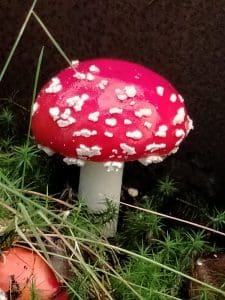
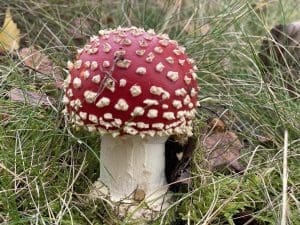
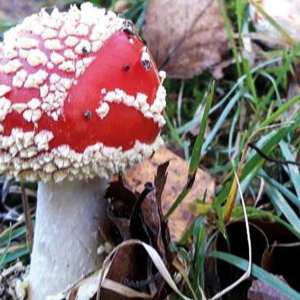
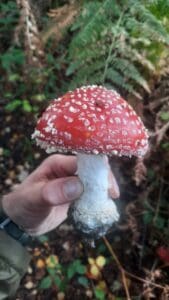
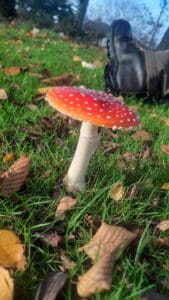
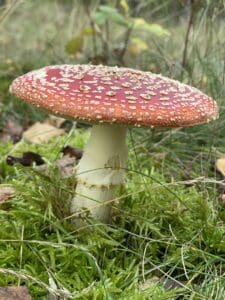
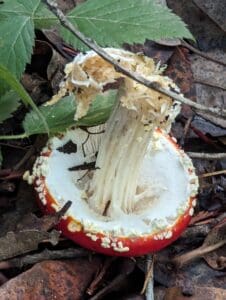
It’s cap, up to 20cm across, is scarlet red with spotted, conical, white fleece like scales. Starting hemispherical developing flat, the margins can appear striate.
Gills
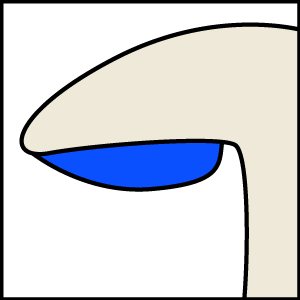
Gills are crowded and white and free.
Stem
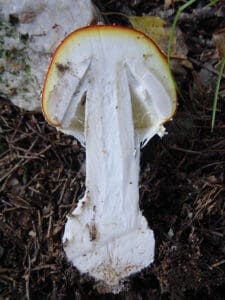
The white stipe, to 20cm tall, is cylindrical and hollow with a bulbous base which is encased in a volva. The stipe has a skirt or ring. The ring is a white, skirt-like remnant of the partial veil that once covered the gills before the cap expanded. The stipe tends to be smooth above this ring and slightly scaly below.
Spores
Spores are white and oval.
Known Hazards
Poisonous when raw – can lead to hallucinations and severe vomiting.
Potential lookalikes
Pretty unique in colour and size.
Cesars muchsroom – which does not have the distinct white spots on the cap.
Potentially one of the other grey Amanita’s such as the Grey Spotted Amanita (Amanita excelsa), if there’s been really heavy rain the red colouring in the cap of the fly agaric can sometimes be ‘washed’ out (although it would be surprising)
Uses
In food
Toxic and hallucinogenic when raw, but if correctly prepared it’s perfectly edible with no side effects.
From an identification point of view, this fungi is unmistakable, it’s very common, abundant and a simple 10 minutes of pressure cooking results in a texture that is really good and a flavour that is subtle and very pleasant (please conduct your own research before pressure cooking and eating)
Herbal uses of the Fly Agaric
Traditionally small doses of the base of this fungi have been used to aid sore throats and general sickness. It has also been using in aiding sleeping and repetitive dream walking.
It has recorded use as a mood enhancer and anti-depressant.
Extra notes from the foragers
A man called big raven is said to have caught a whole whale, but was unable to haul the load back to his starving village. He appealed to the deity of existence who spoke back to him and told him to find and eat the white stalks with spotted scarlet hats, these are the spirits of strength. On doing so big raven was able to carry the haul back to his pleased family although he was unable to eat the kill due to severe vomiting and died of exhaustion. A story of one mans aided sacrifice for the sake of his village.
Muscaria comes from the Latin Musca meaning to fly.