


Panther Cap / Summer / Autumn / Toxic
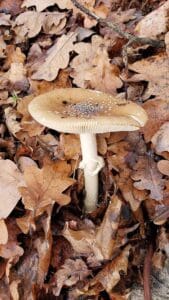
Identification guide for Panther Cap (Amanita Pantherina), also take a look at similar species, key features and habitats – Toxic.
Common names
Panther caps, False blusher, Panther amanita
Botanical name
Amanita pantherina
Habitat
They are ectomycorrhizal with beech and oak. In Britain, they are typically found from August to November but have a longer season in Southern Europe.
Uncommon in the UK but more common throughout Southern Europe.
Identifying features:
Cap:
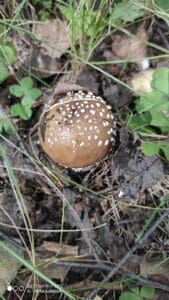
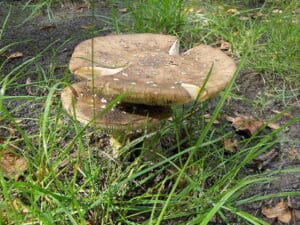
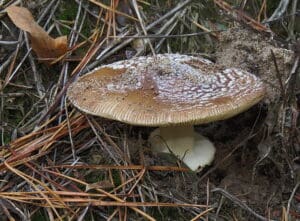
Caps are around 5-12 cm in diameter, initially domed but flattening with age. The caps have pure white scales which are fragments of the universal veil.
Gills
The gills are white, free and crowded.
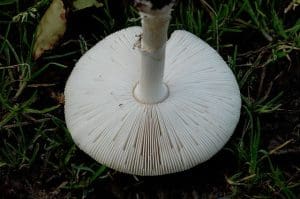
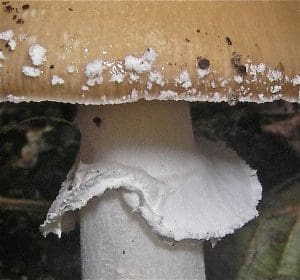
Stem & Skirt
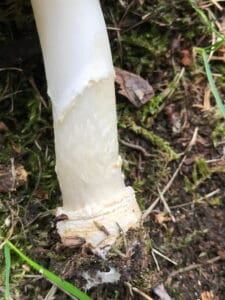
The stems are white with a chunky ring towards the cap. The base of the stem is bulbous with a distinctive gutter.
Spores
White
Known Hazards
These mushrooms contain the psychoactive compounds ibotenic acid, muscimol, muscazone and muscarine so should be considered toxic. Some field guides list it as deadly.
Potential lookalikes
Could be confused with The Blusher (Amanita rubescens) an edible Amanita, but these stain red when damaged, the False panther cap (Amanita excelsa) but these lack the distinct volval gutter.
Uses
These mushrooms contain the psychoactive compounds ibotenic acid, muscimol, muscazone and muscarine so should be considered toxic. Some field guides list it as deadly.
More info on the toxins in the Panther Cap
Leave a Reply
You must be logged in to post a comment.