


Olive Oysterling / Spring / Summer / Autumn / Inedible
Common Names
Olive like oysterling
Scientific name
Sarcomyxa Serotina
Family:
Marasmiaceae
Habitat:
Found in Britain and Ireland, as well parts of North America
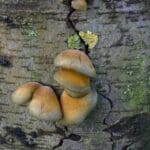
Occurs on dead trees and logs favouring deciduous trees but occasionally found on conifer trees
Physical Characteristics:
Cap
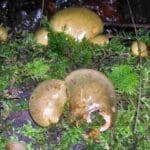
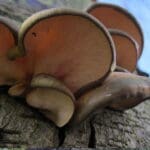
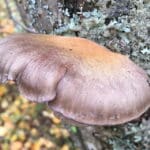
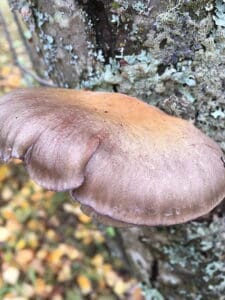
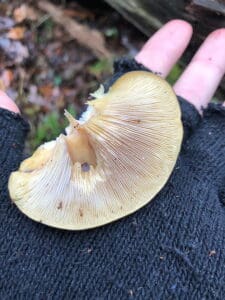
Buff brown with olive green tinge caps which have a wavy edge, they’re very slimy when wet.
Stem
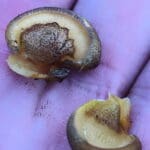
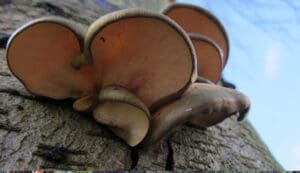
It has a short off-centre stem or nub
Gills
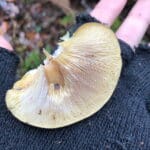
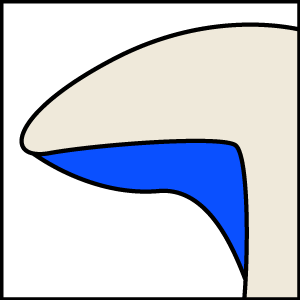
The gills of the Olive Oysterling are yellowish turning brown with age and are decurrent, running from the cap edge all the way down the nub.
Spores
They have white sausage-shaped spores. They often grow singularly or in small clusters.
Known Hazards:
Contains carcinogens which could lead to cancerous growth.
Potential lookalikes
Species of oyster such as the Grey oyster (edible), Angel wings is the only one to be wary of as its reported as being toxic – it is porcelain white.
Use:
Due to the carcinogens, we do not advise eating this mushroom.
Notes on herbal uses:
There is evidence that extracts from this mushroom can help prevent fatty liver disease.