


Red Cracked Bolete / Summer / Autumn / Edible
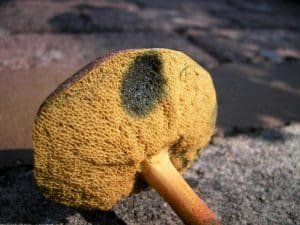
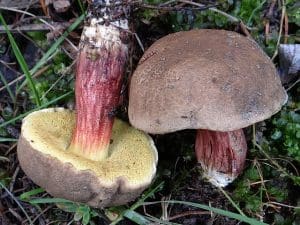
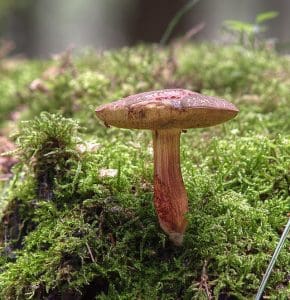
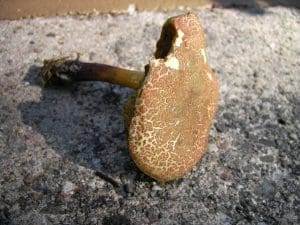
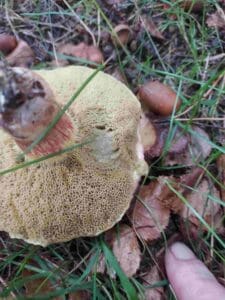
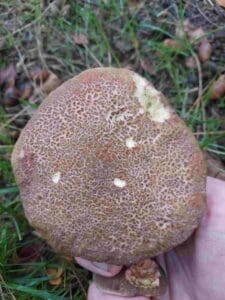
The Red Cracked Bolete is a fairly common mushroom, they tend to be overlooked by some foragers as the texture is quite soft, but they dry very well.
Scientific Name
Xerocomellus Chrysenteron
Common Names
Red Cracked Bolete, Red Cracking Bolete.
Family
Boletales
Habitat
Under deciduous trees most commonly with Beech and Oak. They tend to be one of the first Boletes to appear, once you spot one it normally leads you to another and so on.
Description
A fairly common mushroom, they tend to be over looked by some foragers as the texture is quite soft, but they dry very well.
Identifying Features:
Cap:
Brown to buff, as they age they develop cracks that show a thin layer of red flesh. The flesh may bruise blue when damaged.
Stem:
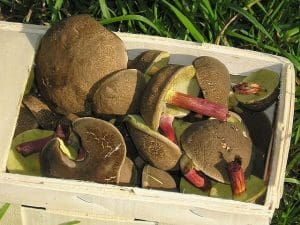
Yellow to light brown in colour, covered in a network of red fibres that gives the stem the appearance of a stick of rhubarb.
Gills:
Pores rather than gills, they are yellow when young before become almost green, the pores when bruise blue when damaged.
Smell:
Mushroomy.
Spores:
Olive green to brown.
Known hazards
None Known.
Potential lookalikes
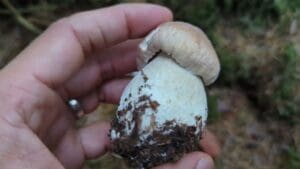
Although it breaks the ‘red or blue will make you spew’ rule for Boletes, it’s quite an easy to ID mushroom about the only things that look similar are other Xerocomoid Boletes.
Uses
In food
If you use them fresh they can be quite wet and slimy, they are much better dried and then rehydrated before use. They must be thoroughly cooked before consumption.
Remove the pores as soon as possible, not only are they soggy when cooked but they deteriorate very quickly.
Leave a Reply
You must be logged in to post a comment.