


Stinkhorn / Summer / Autumn / Edible
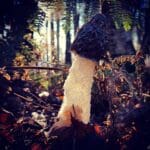
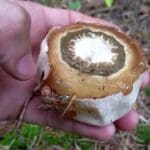
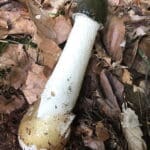
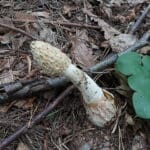
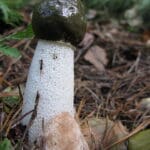
Stinkhorn Mushroom tend to be one that you don’t forget, especially when you see them in full growth as they look incredibly phallic (as the name suggests)
Scientific Name
Phallus Impudicus
Family
Phallaceae
Habitat
Mixed woodland with rotting wood.
Description
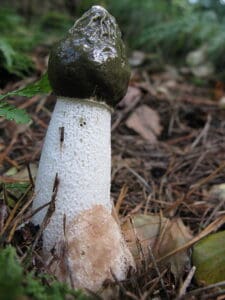
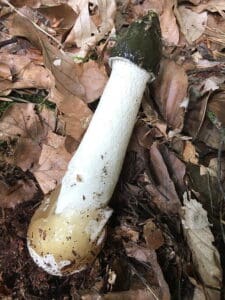
This mushroom grows as an egg partly submerged in the ground. the egg is heavy with a jelly like feel. The Stink horn bursts out and forms the very phallic looking fungi. The cap is covered in a sticky liquid called gleba which attracts flies to spread spores.
Foraging Video for the Stinkhorn Mushroom
Identifying Features for Stinkhorn:
Cap:
First appearing smooth and olive grey brown to black but this is what’s called the gleba which contains the spores. The gleba attracts flies which spread the spores of the Stinkhorn. they take the gleba with them and leave a white cap with a honeycomb pattern.
Stem:
Hollow, white and like spongey honeycomb. Flesh soft and rubbery in the cap, like polystyrene in the stem
Gills:
None, the stink horn spores in rancid smelling olive green sludge called gleba
Smell:
Putrid rotting flesh though some say it smells sweet like honey.
Spores:
held in the olive green liquid called gleba but the spores are yellow
Known hazards
The Smell!
Potential lookalikes
Can look a bit like a Black Morel or False Morel but the overwhelming stench of the Stinkhorn should save confusion.
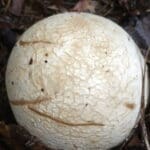
Can also look like a Puffball, Earthball, pictured, or an Amanita egg when in the egg stage.
Uses
Rumored to be an aphrodisiac. however that is more down to the shape of the mushroom rather than any chemical properties.
In food
the egg stage of the Stink horn is reputed to be edible and apparently tastes of radishes. However the smell of these is often unbearable and that enough to put people off.
Leave a Reply
You must be logged in to post a comment.