


Pepper Dulse / Spring / Summer / Autumn / Winter / Edible
Common Names
Pepper dulse, Truffle of the Sea
Botanical Name
Osmundea pinnatifida
Scientific Classification
Kingdom – Plantae
Order –Ceramiales
Family – Rhodomelaceae
Habitat
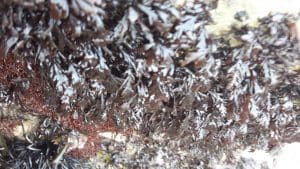
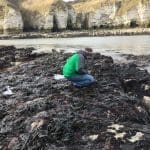
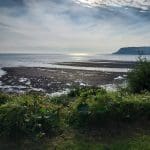
Pepper Dulse likes rocky shores a little further towards the water than the wracks, but not as far as the kelps, and the best place to look is on boulders with lots of nooks and crannies.
Widely distributed around the coast of Britain and the north-western coasts of France, Spain and eastern Europe.
Physical Characteristics:
Fronds
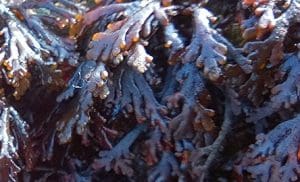
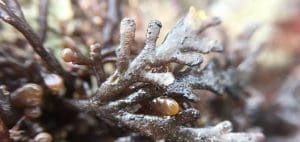
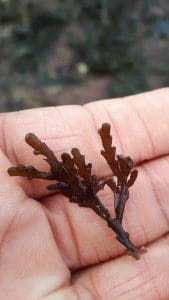
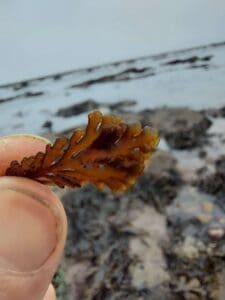
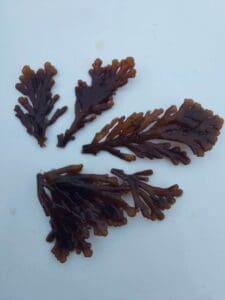
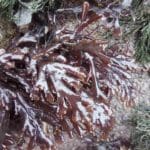
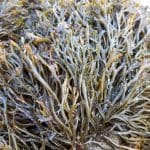
This seaweed looks quite like a fern, with fleshy, flattened, branched fronds that usually have an overall triangular shape. The size can vary greatly, with those furthest from the water being greenish in colour, and those further towards the water being reddish brown. It is considered a red seaweed despite its ambiguity in colour. It grows in clumps, and will often be among many similar looking species, so really practice identifying this one!
Holdfast
The holdfast is small, discoid (disc-shaped) and firm.
Known Hazards
As with most seaweeds, the high iodine content means that those with thyroid issues should be careful not to consume too much if they are already taking iodine supplements. Likewise, the salt content may be a problem for those who need to limit their salt intake. In general, there are more hazards associated with the environment you find it in than from the algae itself. It is wise to check water quality data from the Environment Agency (https://environment.data.gov.uk/bwq/profiles/ ) to see whether there are issues with chemical or sewage pollution in the water, and to rinse your harvested seaweed well with clean water to be on the safe side. You should also be aware of slippery or unstable rocks, and the possibility of the sea coming round quickly and cutting you off from land. Check the tide times, only harvest from areas you can get to safely, and take someone with you to get help if you get into difficulty.
Could Be Confused With
Irish Moss and several other species such as Syphon Weeds can appear similar, but are much coarser and finer, respectively. It’s a process of learning to recognise patterns, like a language of form, and comparing something you are certain of with something you are not certain of is a great way to practice.
Edible Uses
Often called ‘Truffle of the sea’ in some culinary circles, this seaweed always receives the widest eyes and most surprised grins on our coastal foraging walks.
It’s flavour is difficult to fathom coming from a tiny red sea plant, but tastes like a sea pig were made into smoked chorizo.
Definitely, one to use as a spice rather than a bulk ingredient – a little goes a long way. The red seaweeds are particularly high in protein per gram, and also contain high levels of (naturally occurring) sodium monoglutamate, giving the delicious meaty, umami flavour.
It retains the flavour when cooked or dried (although it does taste best fresh) and made into a spice – a great addition to your table salt and pepper.
Get to know the flavour and experiment! Savoury biscuits, crackers, breads, pastries and sauces are definitely recommended. You could also beat it into a special batch of butter, or make a range of flavoured salts with other foraged ingredients too.
Notes on Herbal uses
Full of minerals, this seaweed is a wonderful tonic spice for regular use. It also contains high levels of iodine which is essential for good overall metabolic health.
Conservation Considerations
This is a very common seaweed on Britain’s rocky coasts. Harvest with care, never clearing a single patch, and always leave the holdfast so that the seaweed can regenerate.
Extra notes from the Foragers
This seaweed is one of the easiest to get mixed up with other red/brown seaweeds that also branch and share the same boulders. These are mainly Irish Moss (much bigger and coarser than Pepper Dulse) and various small tufted seaweeds (much finer). I have often found large clumps of Pepper Dulse growing underneath channel and serrated wracks, so do have a look under large clumps. Always cut the Pepper Dulse away from its holdfast, to allow the seaweed to regenerate and to avoid sand and rock in your batch. Aim for the two hours around low tide to give yourself the best chance of finding some.
Click here to explore more Seaweed guides
Leave a Reply
You must be logged in to post a comment.