


St George’s Mushroom/ Spring / Edible
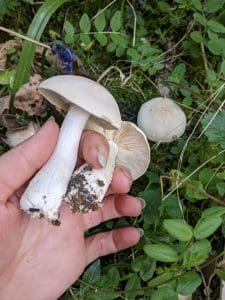
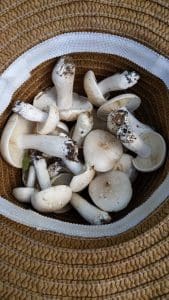
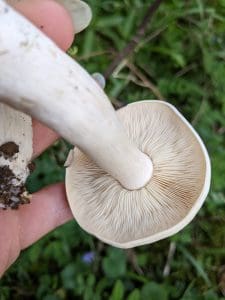
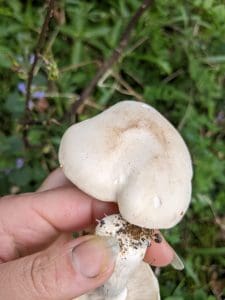
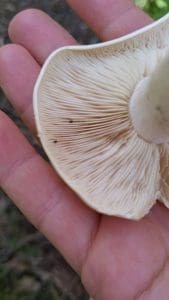
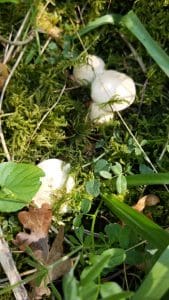
St Georges mushroom is a brilliant edible springtime mushroom, look around St George’s Day after some rain.
Common names
St. George’s mushroom
Scientific name
Calocybe gambosa
Family
Lyophyllaceae
Habitat
Grassland, the edge of woodland, hedgerows
St Georges Foraging Video
Description
A stout white-capped mushroom, with white gills. This mushroom fruits a few weeks before or after St George’s Day, 23 April; which gives it its common name.
Look out for rings of lush grass throughout the year and check them in April to May.
Identifying features:
Cap
The cap grows to 5-15cm and often turns buff with age.
Stem
The stem is solid and more bulbous towards the base, white throughout and between 1 – 8cm. It has no ring on the stem and is often found growing in rings. It can be found growing in tight clusters and partial rings.
Gills
The gills are very narrow compared and crowded.
They are sinuate.

Smell
The mushroom has a strong mealy/wet dough scent.
Known hazards
None known
Could be confused with
The Deadly Fibrecap (Inocybe erubescens), but the gills of this bruise red and it does not smell mealy
Uses:
In food:
One of the few mushrooms that can be eaten raw. St George’s Mushrooms can also be pickled. However, the most popular method to eat them is fried in butter. Cooking can remove some of the mealy odour/flavour. Also a good mushroom for dehydrating, as well as using in stocks
Extra Notes from the foragers
Be aware of traffic-related toxins in the soil if collecting from roadside.
The scientific name comes from the ancient Greek words kalos “pretty” and cubos “head”, and the Latin gambosus, meaning “club footed”. The species name is a reference to the often one-sided bulbous shape of the stem base