


Scurvy Grass / Spring / Summer / Autumn / Winter / Edible
Common Names
Common Scurvy Grass, Danish Scurvy Grass, English Scurvy Grass
Botanical Name
Cochlearia officinalis
Scientific Classification
Kingdom – Plantae
Order –Rosales
Family – Rosaceae
Physical Characteristics for Scurvy Grass
There is Scurvy Grass for most of the growing season, and they make a welcome appearance early in the year during the ‘hungry period’.
Leaves
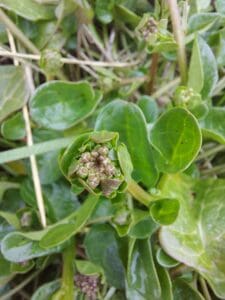
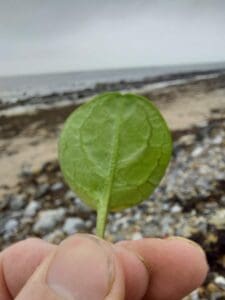
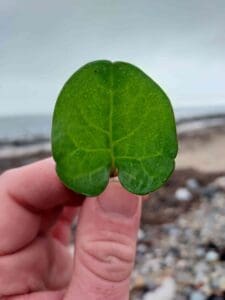
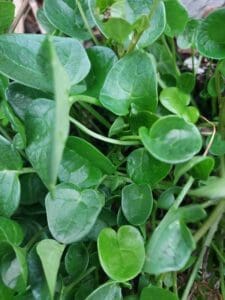
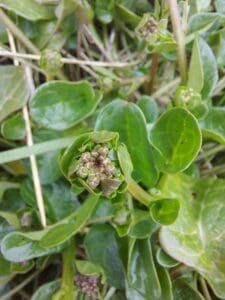
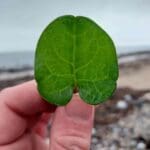
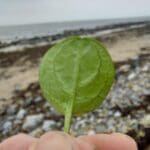
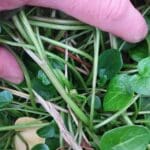
They grow low to the ground, sometimes out of walls, concrete paths or other rocky areas, and have fleshy, succulent leaves that help the plant to cope with the near toxic levels of salt near the seaside. Also found growing near roads. The leaves tend to be rounded at the base and slightly pointed at the end, and join the stalk one at a time. They grow from a basal rosette.
Flowers
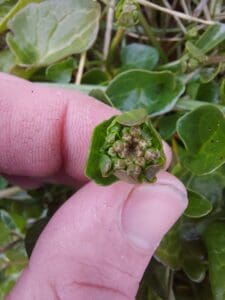
Flowers are the characteristic 4 petalled blossoms of the Mustard family and form clusters that become very dense as the season wears on.
Seeds
The seeds are round and dark coloured, with a small pale stalk.
Habitat
Found where salt levels tend to be high; near the coast, in salt marshes and along roadsides. It is common on the shingle shores of England, Holland, Belgium and Germany, particularly in the Eastern and Southern regions.
Known Hazards
None known
Could be Confused with
Other Mustard family plants, but few have the same succulence and live in coastal regions.
Lesser Celandine (Ficaria verna) is potential confusion, but does not tend to grow in coastal area’s, does tend to have whitish variegation on the leaves (which are also much more distinctly heart-shaped) and has bright yellow Daisy-shaped flowers.
Edible Uses
Scurvy Grass leaves and flowers have a strong, peppery taste (cousin to Horseradish!) that make them a delicious addition to salads, quiches, coastal dishes or early springtime soups. It is relatively potent so be sure you like it before filling your basket!
The young seeds are round, crunchy and very peppery – great for garnishing and pickling. Once they get older they get a little too tough to enjoy.
The young flowering tops – like with most plants in the Brassica family – can be used as a version of sprouting broccoli.
Notes on Herbal uses
Like many members of the Mustard family, the hot taste denotes chemicals that stimulate the circulation and are often antimicrobial. Include them in your diet regularly to receive these tonic benefits.
Extra notes from the Foragers
Allegedly dried and bundled for long sea voyages during Tudor times. However, the vitamin C the sailors craved would have oxidised during the drying process, making this a futile venture!
Scurvy grass is making its way around the roads of the UK at a rate of 10-15 miles per year (according to the Field Studies Council) due to seeds being caught in car tyres and distributed in hedges far and wide!
Scurvy Grass has the characteristic 4 petalled flowers. If you Learn to recognise this flower pattern you will unlock a huge range of edibles in the Mustard family across the UK!
Leave a Reply
You must be logged in to post a comment.